
It is intriguing to realise that every single photographer starts this passion because of a deep-rooted fascination for the mechanical and technical aspects of the craft. The first camera he purchases is invariably simple, lacking advanced features and having seemingly more compromises than benefits. As mediocre as this machine may seem, it challenges the ambitious amateurs to elevate their craft to match professional standards.
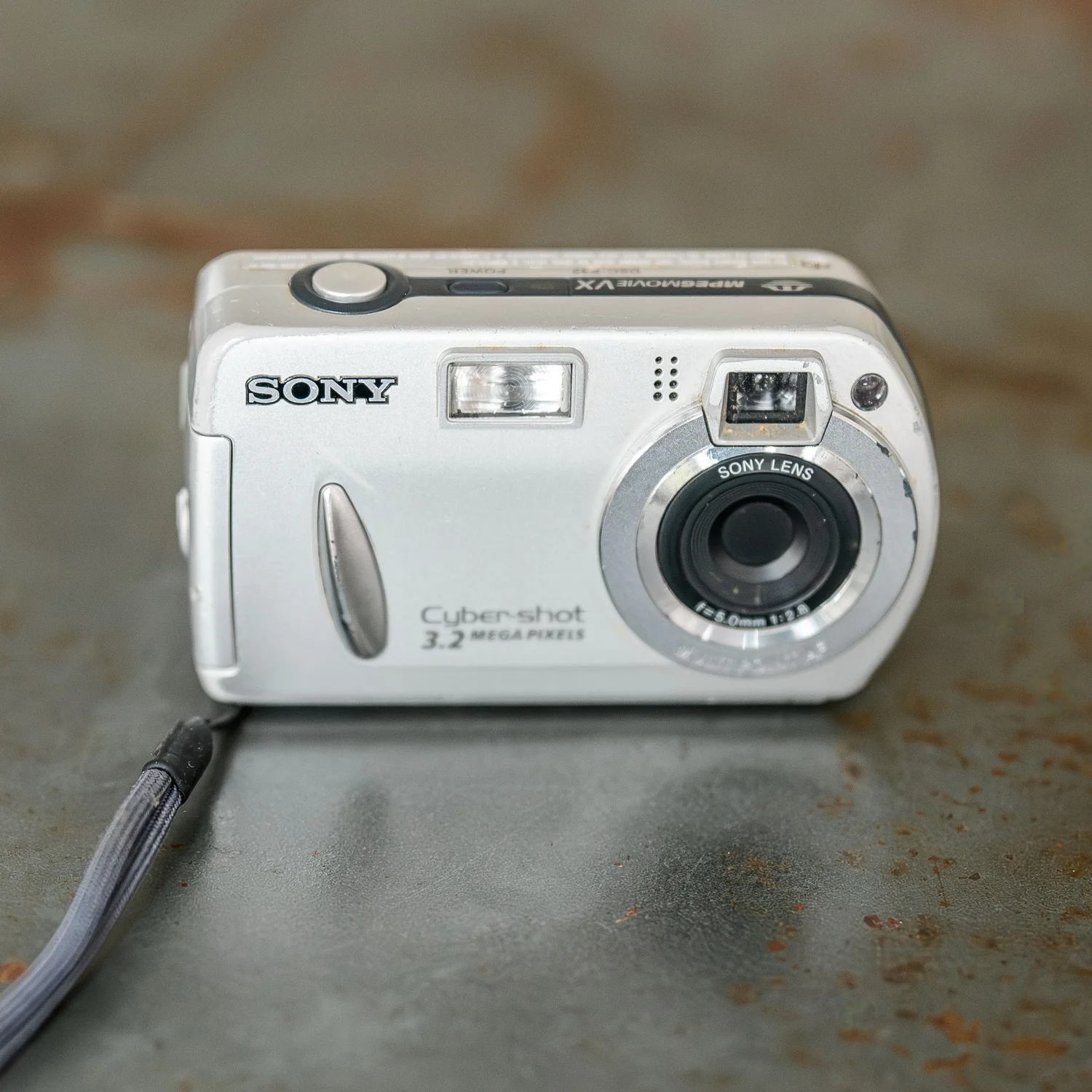
My parents gifted me a Sony Cyber-Shot DSC-P32 for my 1st communion in 2003. Looking back at it, the technical specs of this machine put a smile on my face. Being one of the first amateur-grade consumer cameras on the market, it boasted a whopping 3.2-megapixel sensor so tiny in size that its fixed aperture is the equivalent of a full-frame f/18!
It goes without saying that the term ‘bokeh’ remained unknown to me for years – until I bought a Fujifilm X-T3 in 2019. Combined with a limited ISO of 100, 200 or 400, it challenged me in ways my modern cameras never could. This little DSC-P32 taught me everything about lighting, composition and storytelling.
After buying my Fujifilm X-T3, I fell into a trap that almost every photographer fails to spot. Ironically, I even issued a warning about this a few years ago, in a previous blog post. This little Fujifilm provided everything I needed, with excellent small lenses and beautiful colours. But the hearts of Men are easily corrupted… And some things that should not have been lost, where sold.

VdVisuals abandoned his first camera. He believed he needed in-body stabilisation, so he bought an X-T4. Then, he believed he needed a larger sensor, so he bought a Nikon Z9. Feeling that he missed the old systems, he bought a Fujifilm X-T5. Finally, because of compatibility reasons, he swapped the X-T5 for a Nikon Z6iii. But the more he gave them away, the more he came to realize. The pixels would not satisfy, colours turned to grey in his eyes, nor the technology in the world would harm or slake his lust.
Let’s talk about the Nikon Z9 to illustrate how the photography business fools us all. It goes without saying that this machine is a technological masterpiece. It has an incredible sensor, magical image stabilisation and brilliant automatic features.
Unfortunately, despite taking this camera with me on many of my greatest adventures, I still haven’t developed any deeper connection with it. Whilst the little analogue Canon A1, the Sony DSC-P32 or the Fujifilm X-T3 have a special place in my heart, I don’t especially care about the Z9. In fact, I sold his smaller brother, the Z6iii a few months ago and haven’t thought about it once.
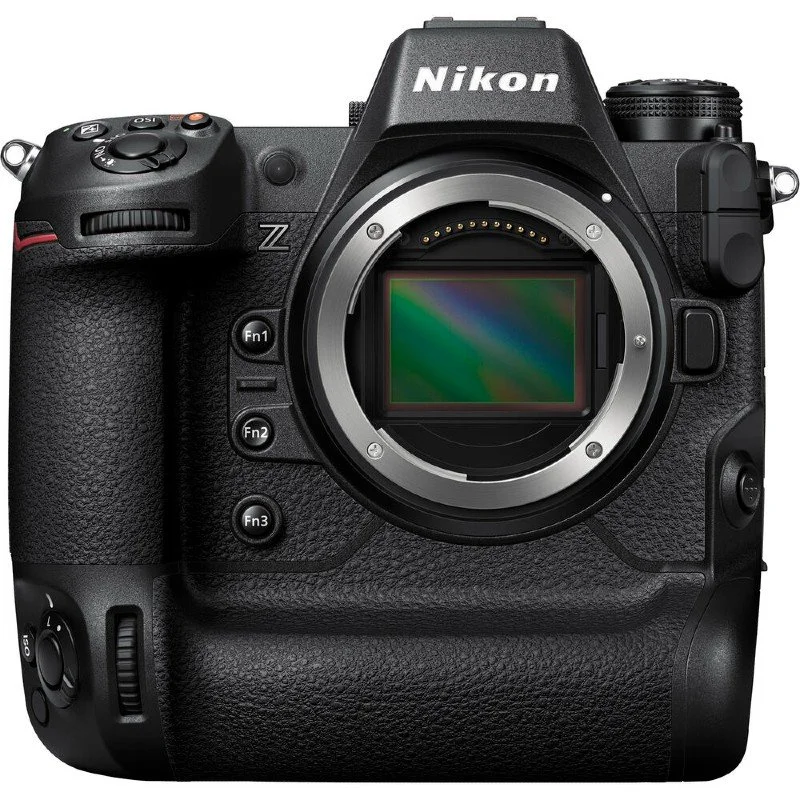
"I slowly realised that it’s not really a camera anymore. Instead, it simply feels like a light-collecting computer that automatically produces the best possible image – without needing a very experienced operator."
First, the electronic viewfinder (EVF) disconnects the photographer from the subject through a screen. Somehow, when I look at my subject through this EVF, I mentally cannot accept that I’m looking at the real deal. This made me think of that one scene in “The Secret Life of Walter Mitty”, where the photographer observes a rare snow leopard and decides to simply watch instead of focussing on taking pictures – simply to enjoy the sight. If I’m looking at my subjects through a digital screen, it doesn’t feel like I really “saw” it with my own eyes. If this makes sense?
Secondly, mirrorless cameras also promote a total mechanical dissociation from reality. To explain this, I reason that it’s easier to talk about musical instruments – more specifically the violin. A decade ago, companies were aggressively promoting digital violins, made from plastics and metal. Technically, they could have been used professionally because the sound engineering was very realistic. Ten years later, I still don’t know a single professional violin player who swapped his wooden instrument for this digital medium. The reason is very simple: a musician can somehow “feel” that he’s making a mistake, without even hearing the note.
I believe it’s about immediate tactile feedback and incredible muscle memory. I have this same sensation when playing the piano. Even the most expensive digital piano I ever played, didn’t feel as legitimate as a cheap “analogue” one. This is what alienates us from the more modern mirrorless cameras. We don’t receive any physical feedback.
There is no mechanical shutter snap that can indicate how fast the shutter fired, image focus is almost entirely based on Auto-Focus because manual focus is impossible to use on modern lenses (there is typically a sensible amount of input lag on electronic focussing systems). It has already happened way too often, that I went home after a shoot, only to find that some of the pictures were blurry or out of focus, despite my strong belief that the image was going to be excellent. This is not the case with my older gear. I tend to feel that the shutter speed was odd, or that the focus would be wrong.
Returning to the Roots
Now! With this in mind, I’m about to ignore my gear-acquisition warning once again. Tonight, I shall have purchased an older generation DSLR camera: the Nikon D850. Technically, it’s still an incredible camera with excellent sensor – but somehow because of the mirror, people like me always looked at them as being relics.
Perhaps I’m finally going to be proven wrong. Maybe returning to older cameras is what is actually going to make me enjoy the craft more and challenge me to become a better photographer.