
The camera industry changed drastically this last decade, and with this essay I’d like to prove why this transformation has been poisonous. Though DSLR’s used to dominate the photography market, they are now almost extinct. Every major brand dropped the mirrors to pivot towards mirrorless cameras; photographers (me included) look down upon the pathetic DSLR plebs. Never have we been so wrong.
Why did the industry pivot to mirrorless cameras?
This technological revolution rescued struggling photography companies, who got their market share obliterated by jaw-dropping smartphone (computational) photography. Companies like Sony, Canon or Nikon needed to provide the amateurs with something new and better, to stimulate interest and fascination again. Thanks to this new technology, images became sharper, focus smarter and speed faster. Unfortunately, and despite the commendable know-how, I strongly believe that these two new ways of taking photos (smartphones and mirrorless cameras) undermine the true essence of amateur photography.
Why are we photographers and not painters?
What differentiates a classical painter from a photographer? Theoretically, they both observe a scene and try to freeze that specific moment in time, to subsequently share it to a larger public. Contrary to painters, it is intriguing to realise that every single photographer enters this hobby because of a deep-rooted fascination for the mechanical and technical aspects of the craft. It’s all about the clicks, the snaps, the rolls, the pops and the flash. The first camera he purchases is invariably simple, lacking advanced features and having seemingly more compromises than benefits. As mediocre as the primitive machine may seem, it challenges the ambitious amateur to elevate his craft to match professional standards. Do not trust the amateur whose very first camera is the newest Leica or Hasselblad.
Plato’s allegory of the cave: or how everyone remembers their first time
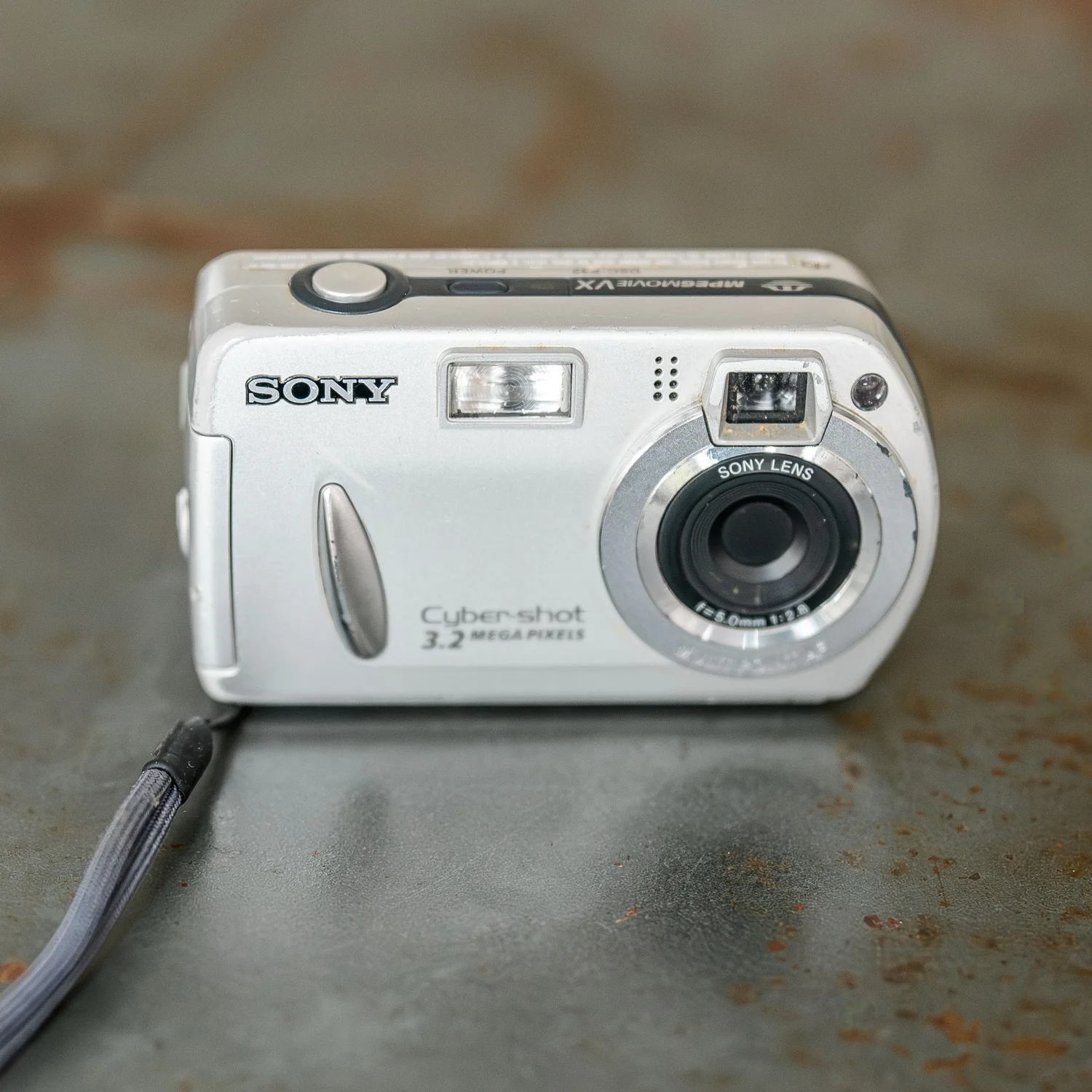
My parents gifted me a Sony Cyber-Shot DSC-P32 for my 1st communion in 2003. Click here for more info. Looking back at it, the technical specs of this machine put a painful smile on my face. Being one of the first amateur-grade consumer cameras on the market, it boasted a whopping 3.2-megapixel sensor so tiny in size that its fixed aperture is the equivalent of a full-frame f/18! (yes, you read that correctly. I didn’t forget a comma between the 1 and the 8…) It goes without saying that the term ‘bokeh’ remained unknown to me for years - until I bought a Fujifilm X-T3 in 2019. Combined with a limited ISO of 100, 200 or 400, it challenged me in ways modern cameras never could. This little DSC-P32 taught me everything about lighting, composition and basic storytelling.
Obviously, comparing my images to those of true pro’s, I felt that I was missing out on some important things; I just couldn’t really figure out what exactly… Like the caveman in the allegory of Plato, Bruno didn’t know he needed larger apertures, removable lenses or larger sensors.
The first professional camera: seeing the light
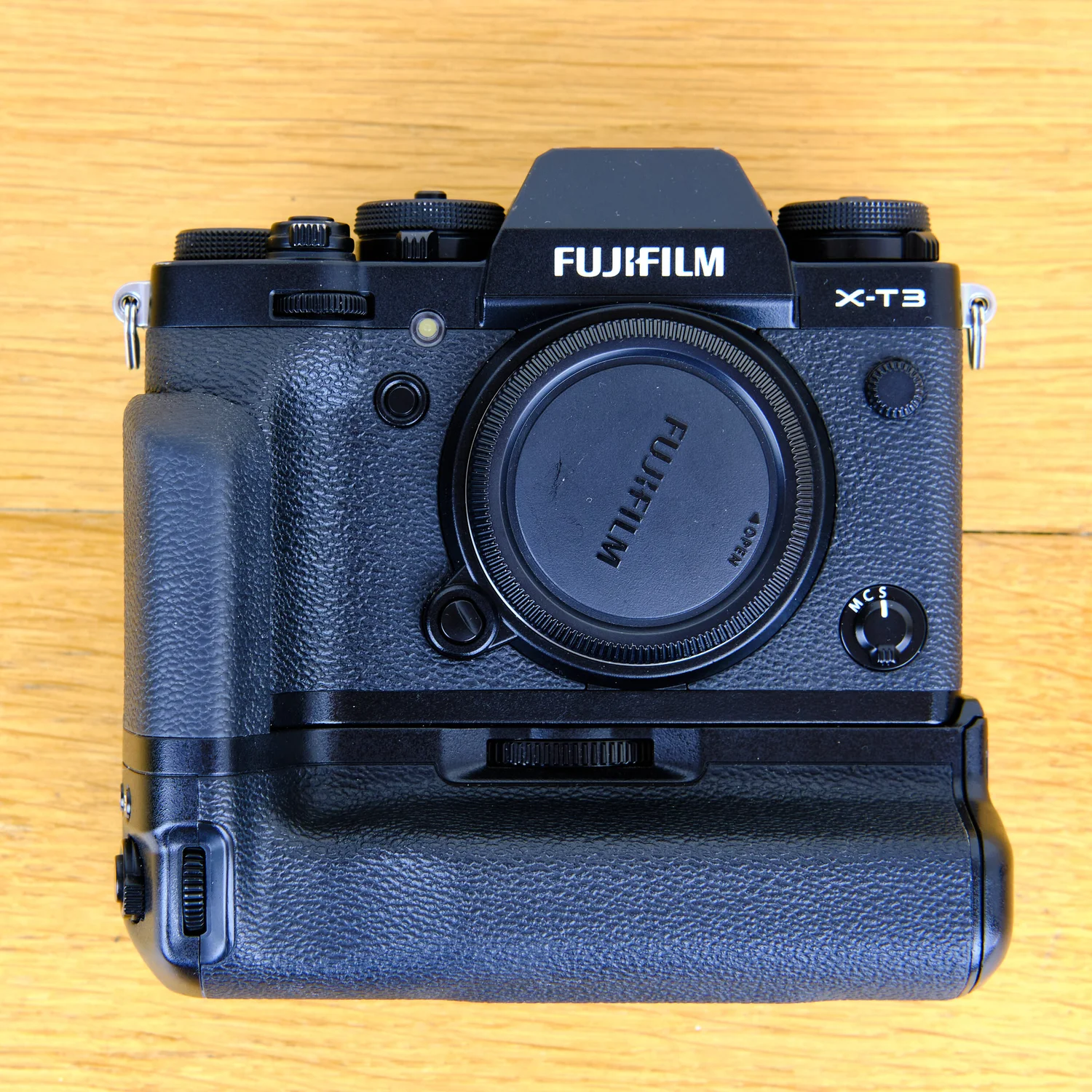
The day Bruno bought the X-T3, he finally left the cave. Though at first blinded by the sudden light, he quickly adapted to become what has now become “VdVisuals”: a photography dork. The manual dials of this small metal body allowed me to understand concepts such as ISO, the exposure triangle or even depth-of-field. In retrospect, before having this camera, I never really thought about different lens designs (prime lens vs. zoom lens), the different focal lengths or apertures… Suddenly, I got sucked into the rabbit hole of optics, which unfortunately cost me a fortune. The images were also significantly larger and sharper, which attracted my first few clients. The X-T3 taught me to edit on a computer, something I came to loathe later.
After two years of pure and innocent enjoyment, I fell into the classic trap that every single photographer fails to spot. Ironically (or shall I say embarrassingly), I even issued a warning about this a few years ago, in a previous blog post. Back then, I warned my readers about being seduced by megapixels or fancy/trendy automatic features. The small yet loyal X-T3 provided me with everything I ever needed. But the hearts of Men are easily corrupted… And some things that should not have been forgotten, where sold.
Betrayal of a very old friend: or how selling the X-T3 made me lose myself in useless gear-acquisition
VdVisuals abandoned his camera. He believed he needed in-body stabilisation, so he bought an X-T4. Then, he believed he needed a larger sensor, so he bought a Nikon Z9. Feeling that he missed the old systems, he bought a Fujifilm X-T5. Finally, because of compatibility reasons with the Z9, he swapped the X-T5 for a Nikon Z6iii. But the more he gave them away, the more he came to realize. The pixels would not satisfy, colours turned to grey in his eyes, nor the technology in the world would harm or slake his lust. He cursed himself. Shopaholic he called himself. And he wept, VdVisuals, he wept to be so uninspired. He forgot the snappy shutters… the clicks of aperture rings… the softness of the light. He even forgot manual focus. Mirrorless. Soulless.
After betrayal comes denial: trying to love the Nikon Z9
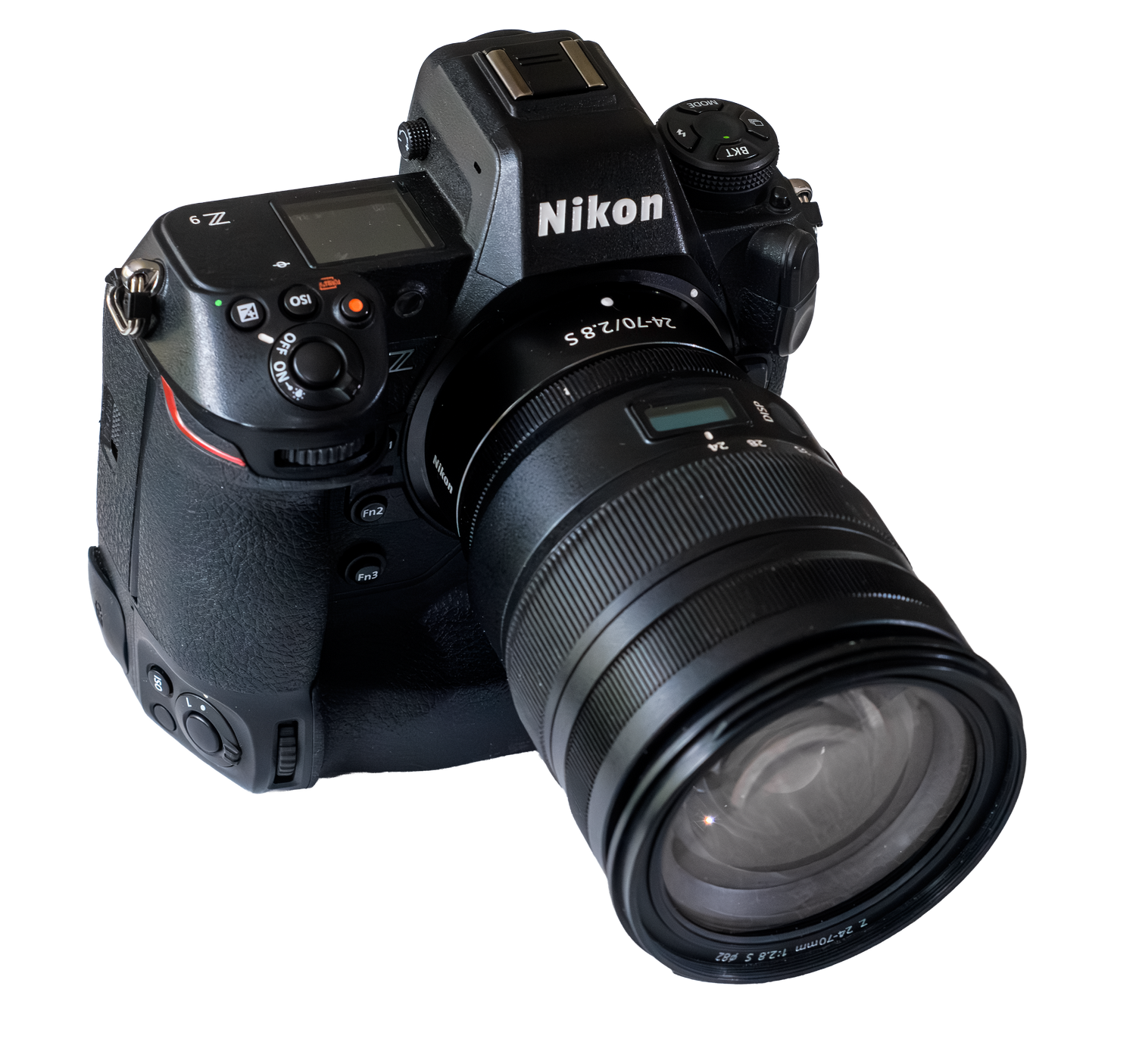
After buying the Nikon Z9, I quickly boasted about all the incredible features this camera possesses. On my gear page, I proudly wrote that this camera would revolutionize my wedding photography skills. After two years of intense use, I think it’s now time to take a step back and analyse how this camera changed me and my passion.
Credit where credit is due
It goes without saying that this machine is a technological beast. The sensor is incredible; the image stabilisation is superb and the automatic features unmistakenly crown this camera king. The camera’s auto-focus is quick and efficient, recognizing subjects and scenes effortlessly. The new Z-mount lenses are insane; the optical quality is better than anything I ever experienced, the images are razor sharp from edge to edge and the colours are vibrant and contrasty. The photos I take now are way better than those I took before acquiring this machine. The quality of my wedding portfolio has exploded.
A loveless situationship
Unfortunately, despite taking this camera with me on many of my greatest adventures, I still haven’t developed any anthropomorphic connection with it. Whilst the little analogue Canon A1, the Sony DSC-P32 or the Fujifilm X-T3 have a special place in my heart, I don’t particularly care about the Z9. In fact, I sold its smaller brother, the Z6iii a few months ago and haven’t thought about it once. The only thing I value about the Z9, is its price tag.
What I learnt from using a flagship mirrorless camera
Mechanical feedback matters
The most important point is that mirrorless cameras create a total mechanical dissociation from reality. To explain this, I reason that it’s easier to talk about musical instruments - more specifically the violin. A decade ago, companies were aggressively promoting digital violins, made from plastics and metal. Technically, they could have been used professionally because the sound engineering was supposed to be very realistic. Ten years later, I still don’t know a single professional violin player who swapped his wooden instrument for this digital medium. The reason is very simple: a musician can somehow “feel” that he’s making a mistake, without even hearing the note. Like the violin, analogue photography is about immediate tactile feedback and incredible muscle memory.
"Like the violin, analogue photography is about immediate tactile feedback and incredible muscle memory."
I have this same sensation when playing the piano. Even the most expensive digital keyboard I ever played didn’t feel as legitimate as a cheap “analogue” one. This is wat probably alienates me from the more modern mirrorless cameras. I don’t receive any physical feedback. There is no mechanical shutter snap that can indicate how fast the shutter fired, image focus is almost entirely based on Auto-Focus because manual focus is impossible to use on modern lenses (there is typically a sensible amount of input lag on electronic focussing systems). It has already happened way too often, that I went home after a shoot, only to find that some of the pictures were blurry or out of focus, despite my strong belief that the image was going to be excellent. This was not the case with my older gear: with those, I felt that the shutter speed was unfitting, and I instinctively knew how much I had to turn the focussing ring to lock onto my subject.
Dependency on technology: are we still photographers or did we become simple operators?
The Nikon Z9, because of all its impressive automatization, isn’t really a ‘camera’ anymore. It’s a sophisticated light-collecting computer that is excellent at calculating how to make a technically perfect visual representation of a scene. The only thing the human must do, is press on the shutter button at a fitting time. Seriously, can we call it a shutter button at this point? Wouldn’t it be more fitting to call it a “save image as” button? When I look at my images on a large computer screen and it turns out that the camera focussed on the wrong thing, it isn’t my failure as a photographer but it’s the failure of a system that didn’t understand what my mind wanted to focus on.
Augmented reality: why looking at a screen is not the same as seeing with your own eyes
Earlier, I talked about how mechanical feedback is crucial to remain synched with your photography environment. To make this digital dissociation even worse, it feels as if the electronic viewfinder (EVF) of mirrorless cameras significantly disconnects me from reality. When I look at my subject through this EVF, I mentally cannot accept that I’m looking at the real deal. No number of pixels or refresh rates is going to change this feeling. This made me think of that one scene in “The Secret Life of Walter Mitty”, where the photographer observes a rare snow leopard and decides to simply watch instead of focussing on taking pictures - just to enjoy the wonderful sight, to imprint the scene into his memory instead of a memory card. If using a camera already distracts us from appreciating the beauty of our surroundings, then using an EVF instead of an optical viewfinder entirely cuts it away from us.
Bolt-action sniper vs. machine gun: use your bullets wisely
Yet another disastrous side-effect of digital cameras, is the sheer volume of photos taken during every event or holiday trip. I went to Uzbekistan, with nothing more than an old Canon A1 and two lenses (a 28mm f2.8 and a 50mm 1.8). I came home with around 300 photos, almost all of them were keepers that I could print or share. If you haven’t seen these photos, be sure to have a look! Click here to discover my Uzbekistan travel stories. Like a sniper in the bushes, I selected my targets, I waited, calculated and only when I was certain of a shot, I squeezed the trigger once. Now, when I go on photography trips, I come back with >3000 photos. It’s the equivalent of a soldier’s run-and-gun strategy. Shoot first (with overwhelming firepower), think later. Not only do I stop really observing or looking around, but I also dread uploading the RAW files on my computer to edit them. As I am writing this essay, I still have thousands of photos from Georgia and New-Zealand to colour grade. Is this what photography is all about? Sitting in front of a PC screen, selecting and retouching thousands of uninspired photos? Maybe this is why I enjoyed my Fujifilm camera so much: the out-of-camera JPEGs had some beautiful colour grading on them already (they call them film simulations…) which meant spending less time editing afterwards.
Conclusion: we’re just a bunch of junkies chasing highs
All this being said, maybe the problem isn’t the camera. Maybe photographers keep buying new gear because they hope to feel once more what they felt as humble beginners: the exciting thrill of experimentation. Are we therefore any different from the heroine junky who chases new highs but never ever gets to experience that first exhilarating rush again?
What now?
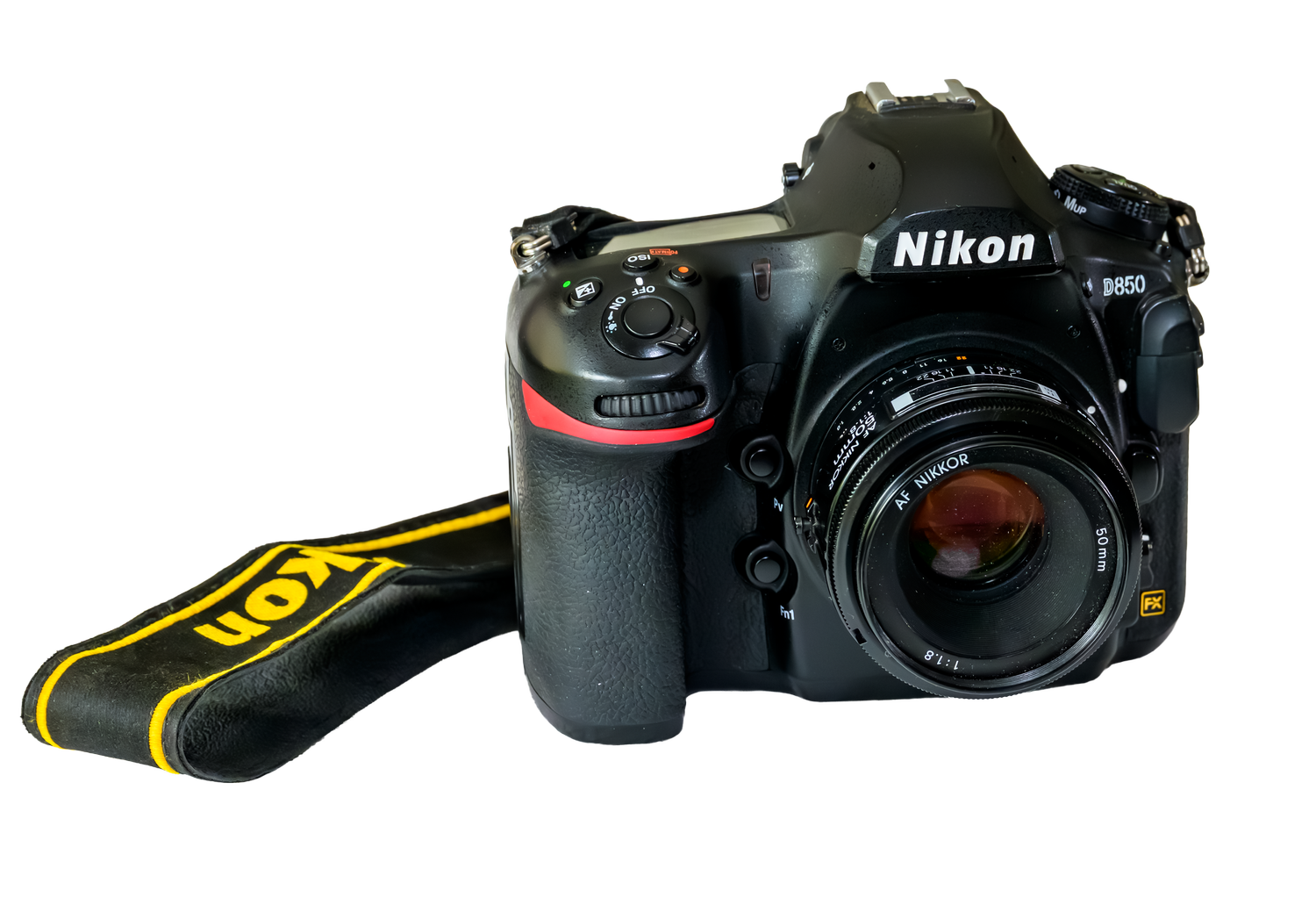
Having accepted my fate as a gear junky and after spending weeks philosophising about a more fitting camera, I’m about to ignore my gear-acquisition warning once again. Tonight, I shall have purchased an ‘older’ generation DSLR camera: the Nikon D850. Technically, it’s still an incredible little fellow, with an excellent sensor. Somehow, because of the mirror, pathetic people like me looked at them as being useless relics. Perhaps I’m finally going to be proven wrong. Maybe returning to older cameras is what is going to make me enjoy the craft again and challenge me to become a better photographer.
Update: May 2025, one month of testing the D850.
This is it, boys. I feel butterflies. D850 is making me experiment again.